


A

My Industrial PhD, conducted across KADK and Henning Larsen, investigates how AI and data-driven methods can support regenerative urban design. The research moves through three phases: first, defining and mapping the concept of regenerative urban design through practitioner surveys and expert interviews, understanding where the profession stands between ambition and implementation; second, examining how urban designers actually work with data in site analysis, developing a comprehensive urban data taxonomy and practical tools like DataLens to make that process more structured and legible; and third, building an AI framework grounded in everything the first two phases reveal about how designers think, what data they need, and where computational methods can genuinely augment human expertise. Ongoing publications in npj Urban Sustainability and Scaffold* Journal document findings along the way.
As AI Strategy Lead at Henning Larsen, I drive responsible AI integration across the firm's offices in Copenhagen, New York, Singapore, Hong Kong, Berlin, and Oslo. Rather than top-down mandates, my approach builds on a four-principle framework: Literacy, Transparency, Agency, and Accountability.
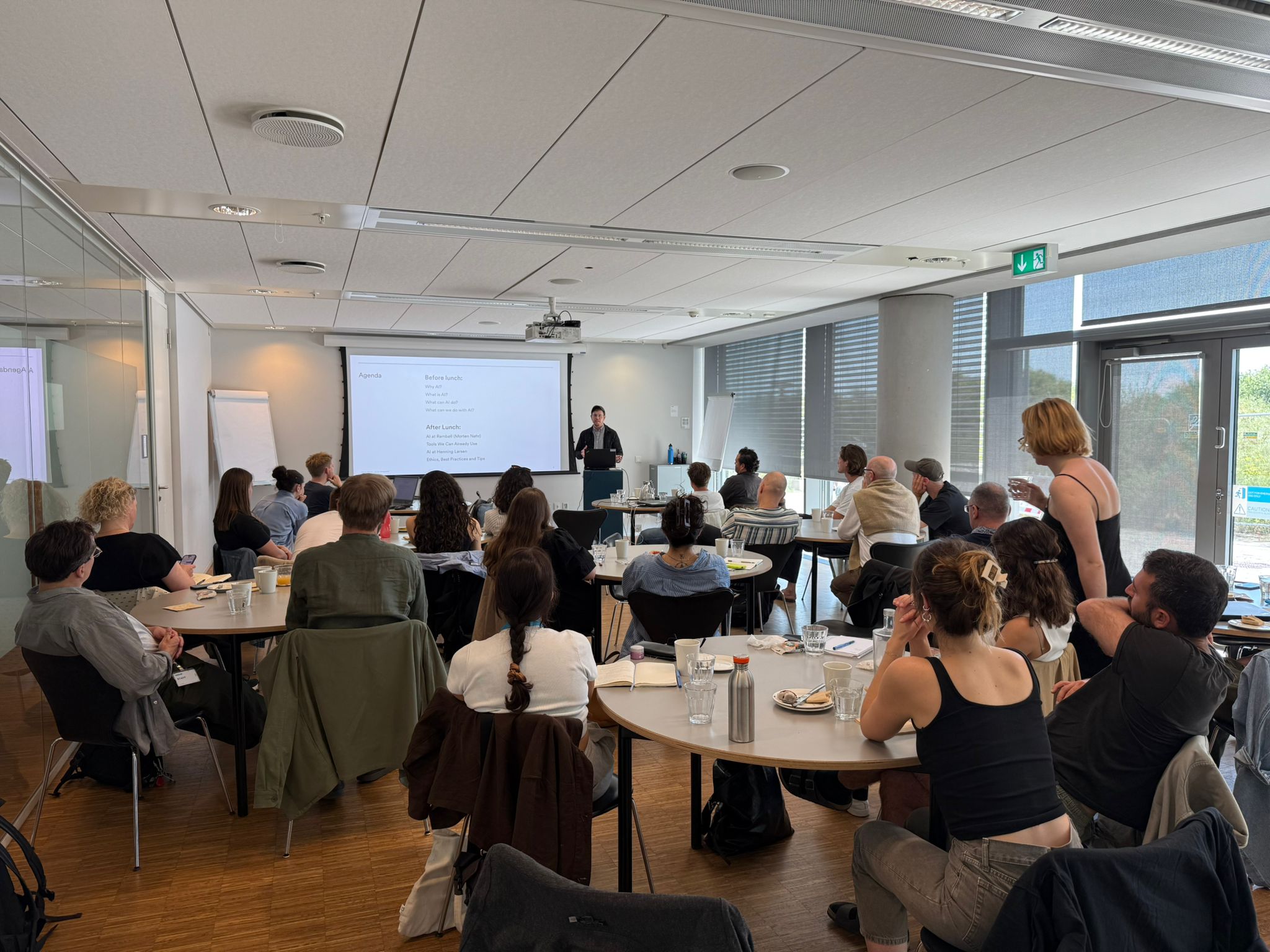
This means running hands-on AI fundamentals workshops for all staff, managing the rollout of enterprise tools like Claude, Perplexity, and Krea, and developing internal strategy documentation. The goal is not just technical adoption but building critical understanding of what AI can and cannot do in a high-stakes design context.
I also advise external firms and contribute to Denmark's national AI standardization committee (DS 855), working to ensure that the architecture profession has a voice in shaping AI policy.
In collaboration with colleagues at KADK and Henning Larsen, I am researching how generative AI tools can support participatory spatial planning. Our study analyzed 473 prompts collected from public exhibitions in Copenhagen and Aalborg, examining how non-experts use text-to-image AI to express spatial preferences and urban imaginaries.
The findings, currently under review for Scaffold* Journal, reveal patterns in how people conceptualize their built environment when given AI as a creative medium. This work contributes to a growing conversation about AI not just as a professional tool but as an interface between citizens and the future of their cities.


