A

My PhD investigates how the human body has been depicted, understood, and imagined within architectural and design education in Denmark over a period spanning approximately 270 years, from the mid-eighteenth century, with particular attention to the decades before, during, and after the 1970s. The project examines how concepts of the body have been produced, transmitted, and transformed through educational practices.
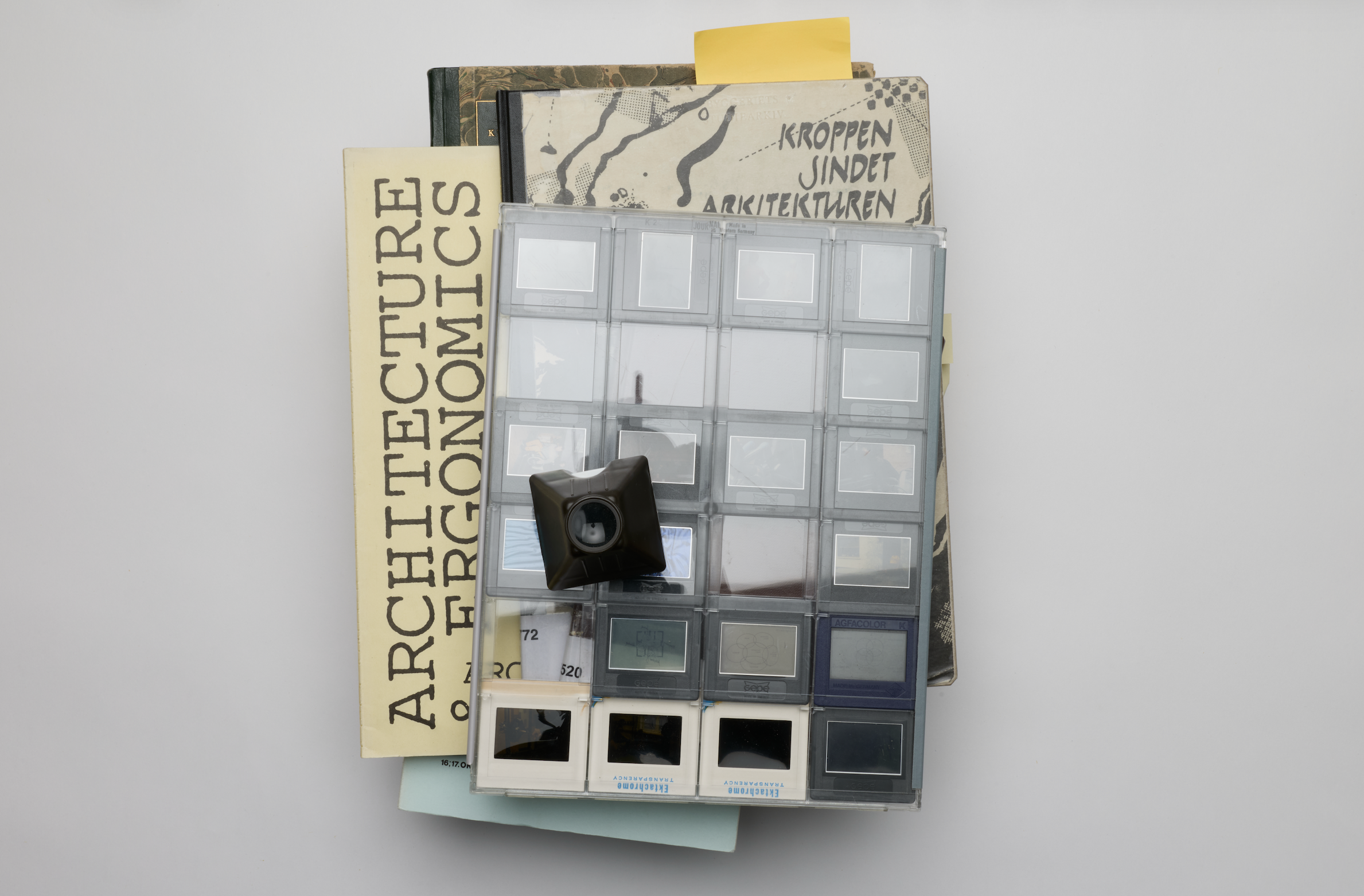
The study develops an incomplete genealogy of pedagogies through the collection, organisation, and analysis of more than two hundred archival sources from public and private archives across Denmark. These materials include curricula, syllabi, drawings, visual artefacts, textual documents, and representations of living bodies within educational settings. Oral histories from different generations are integrated into the genealogy through lived experiences and situated knowledges. By tracing how people, materials, ideas, and institutions interact, the project investigates how certain forms of knowledge become dominant while others are marginalised, dismissed, or forgotten.
Methodologically, the project adopts a non-linear approach that challenges the notion of a singular and coherent history of education. Instead of one dominant narrative, the research foregrounds divergent and overlapping stories, emphasising moment-to-moment transformations and the coexistence of multiple pedagogical trajectories. This approach makes visible how coherent historical narratives themselves can function as forms of exclusion, particularly in relation to bodies that are considered outside normative ideals.
The PhD intends to demonstrate how particular bodily ideals historically became widely celebrated and largely unquestioned, while becoming embedded within educational institutions. At the same time, the study reveals some of the absences these dominant conceptions were part of producing. The project further identifies alternative teaching practices that challenged normative understandings of the body but were frequently marginalised or forgotten. One of the primary contributions of the PhD is therefore to centre these alternative pedagogies, considering what contemporary architectural and design education can learn from them.
The primary supervisor is Masa(shi) Kajita and secondary supervisor Peter Thule Kristensen. The PhD is supported by Bevica Fonden and Realdania.