A

“Those who can must do it for those who cannot. And someone must speak up for those who have no voice.”
— Granny Weatherwax
Denmark is among the most livestock-dense countries in the world, and a major reason for this is that we produce around 40 million pigs annually.
But this raises a very simple question: if Denmark is one of the most livestock-dense countries in the world, then where are all the animals? Where are the millions of pigs that make this density possible?
The project works across two connected levels: systemic reform and spatial implementation.
First, I investigate what structural shifts would be necessary to rethink conventional pig production on more responsible terms.
Then, I test how those shifts could become spatially concrete through the case of Allindemaglegaard.

"The proposal gives pigs more space, outdoor access and better opportunities to express natural behaviour. But it also recognises that manure, land use, weather exposure, rotation and daily operations still have to be managed carefully.
That is why the project works with a hybrid strategy: combining existing environmental-technical infrastructure with new forms of outdoor access, zoning, rotation and land-use organisation.
For me, the project’s contribution is not a better barn as an isolated object.
It is a critical spatial proposition for a different production logic — one that uses buildings, flows, materials and land use to rethink the relations between animals, humans and production.
The proposal is not a final solution, and it does not remove the ethical dilemma of animal production.
But it asks what spatial design can do within that dilemma.
It asks how design can materialise more responsible visions, so they become possible to imagine, discuss and evaluate.
And in that sense, the project is not only about reforming pig production.
It is about asking what kinds of relations between animals, agricultural land, consumption and society we are willing to design."
— Cecilie Kvorning, closing reflection from thesis examination
The following section functions as a critical framing of contemporary pig production and is used as an analytical lens and a mode of inquiry. By presenting the production system as a hypothetical investment pitch, it becomes possible to view an otherwise normalized system from the outside and thereby reveal the structural, ethical, and environmental premises on which it is built. At the same time, this framing highlights the tensions and consequences embedded within the system and points toward an underlying need for change. The pitch therefore operates both as background to the project’s problem field, as a statement of relevance in relation to contemporary societal and environmental challenges, and as a central motivation for investigating how the system can be rethought through spatial design.
So, I would like to invite you to a thought experiment. A thought experiment disguised as an investor pitch.
Imagine that Denmark had never had a pig industry. Now imagine that an entrepreneur walked into Dragons’ Den (Løvens Hule) today to pitch the idea of Danish pig production – as something entirely new.
Dear Dragons,
I would like to present a new food business that could make Denmark the most intensive pig-producing country in the world per capita.
The business model is simple: We produce as many pigs as possible, as efficiently as possible, and as cheaply as possible, so we can compete globally to produce the world’s cheapest pork roast.
We will build a production system that produces around 40 million pigs per year in a country with fewer than 6 million people. And don’t worry – most people will never notice these animals. Around 98% of them will live their entire lives indoors in systems designed with one single purpose: to get as much meat as possible out of each animal.
The production will be so large that we will produce roughly four times as many pigs as the Netherlands, currently the EU’s second most pig-intensive country. Even if we cut production in half, we would still be the most intensive producer in the world.
To make this system work, we must become world champions in optimizing and breeding the animals. Through intensive breeding, we have pushed litter sizes to around 20.5 piglets per litter. Naturally, the number is closer to 10–12, but the goal is maximum production. A sow only has around 14 teats, so the surplus piglets are systematically moved to nurse sows to maintain production efficiency.
In these dense facilities, there is no space for the sow to move freely without risking crushing her piglets. Therefore, we confine her in metal crates for up to 4–5 weeks around birth. The piglets are removed after 3–4 weeks so the sow can quickly be prepared for the next litter.
In a production system of this size, we must expect around 10 million pigs to die every year. That corresponds to roughly 21–22% mortality from birth to slaughter. It sounds extreme – but in a system of this scale, it is part of the equation.
And while we are already using the scalpel, we castrate male piglets when they are only a few days old. It is a routine procedure in this business model. It is also a documented painful procedure – even with anesthesia and pain relief – but it ensures more uniform meat quality and makes the animals easier to manage in the production system.
In such an intensive production system, medical control is naturally required. Therefore, we will use the majority of agriculture’s annual consumption of approximately 87 tons of antibiotics in our pig production. Antibiotics are used both for treatment and prevention of diseases that arise in intensive systems. This contributes to antibiotic resistance in both humans and animals – but it is effective.
Producing this many animals requires enormous amounts of feed – especially protein. Therefore, we will import large quantities of soy from South America, among other regions. Some of this soy is grown on land that used to be rainforest, because global demand for animal feed makes forest less valuable than agricultural land. In this way, we can indirectly help finance deforestation – converting rainforest into animal feed, and then into pork. It is actually a very efficient business model. In practice, we are converting the Amazon into cheap pork chops.
At the same time, we will use the majority of Denmark’s agricultural land to grow feed for pigs. This means less space for nature, less biodiversity, and an agricultural sector that emits large amounts of CO2, nitrogen and ammonia into the air, soil and water environment.
But here is the really smart part: A large share of the climate footprint from imported animal feed falls outside Denmark’s national climate accounting, because emissions are recorded in the countries where the feed is produced. The same applies to parts of the export of piglets. When the truck crosses the border, part of the emissions are recorded in other countries – not Denmark. So on paper, emissions look lower. In reality, they have simply been moved somewhere else, where we do not have to take responsibility.
This is ideal for an export model that requires around 300,000 transports of live animals per year.
And yes – pigs produce enormous amounts of manure. A sow produces around 4,000 liters per year. We handle this by spreading it on fields – and fortunately, we have many of them.
Manure can be described as natural fertilizer. Circular. Sustainable. It contains nitrogen, phosphorus and potassium – exactly what plants need. So in principle, it is simply nutrients returned to the soil. Of course – if you produce very large amounts of manure, the soil cannot absorb it all. Some ends up in aquatic environments and contributes to oxygen depletion in fjords and coastal waters. Some evaporates as ammonia and affects nature and biodiversity. Some becomes greenhouse gases. In worst cases, some can end up in groundwater – and therefore in drinking water. But we see manure is a resource. And we have a lot of it. A lot.
So let me summarize. With this business model, we can produce very large quantities of pork at a very low price and export up to 90% to the global market. We enter directly into a global competition where, fundamentally, it comes down to one thing: producing as much meat as possible, as cheaply as possible.
In that market, animal welfare is not economically rewarded. Therefore, it makes the most sense to invest where we can produce more and cheaper.
The consequence is that we pack millions of animals into industrial production systems. The environmental impact from manure, nitrogen, ammonia and greenhouse gases far exceeds what the Danish natural environment and ecosystems can sustain. In return, the sector will contribute around 1–2% of Denmark’s total GDP.
Production is capital-intensive, debt-heavy, and supported by significant public financing. The average debt per farm is around 20 million DKK. At the same time, it is a model where the largest and most efficient producers can earn very large profits. Meanwhile, a large share of the total external costs – impacts on nature, climate, water environment and health – are not paid through the product price, but are carried broadly by society.
The real strength of this model is that gains are largely concentrated among relatively few actors, while a large share of the long-term costs – environmental damage, public expenses and loss of natural resources – are in practice distributed across the rest of society and the natural environment.
So what do you say, Dragons – who among you wants to join a business journey where value is concentrated among a few, while a large share of the real costs are carried by others – by society, by nature, and by the future?
Danish conventional pig production is among the most intensive forms of animal production in the world. Each year, around 40 million pigs are born in Denmark (Dyrenes Beskyttelse, 2025; Hyttel, 2025), 98% of which are produced conventionally (Danmarks Statistik, 2026). The pigs are bred, raised, and slaughtered within an industrialised system designed to produce very large quantities of meat for a global export market.
The production is characterised by specialisation, efficiency, and upscaling, with fewer farms producing more animals in increasingly larger facilities, and where the farmer increasingly functions as a business manager responsible for running a highly efficient production system (Clark, 2023, p. 22). At the same time, Denmark is one of the most animal-dense countries in the world, yet most of these animals remain invisible in the landscape. Millions of conventional pigs live in closed, indoor production facilities under carefully controlled conditions as part of an economic value chain directed towards a global market.
Within this system, the pig is treated as a production unit, where biology, breeding, and growth are optimised for maximum productivity (Det Dyreetiske Råd, 2025, p. 5). This form of production therefore contains a fundamental conflict between the pursuit of the greatest possible efficiency and consideration for animals, nature, and the environment. Criticism is directed, among other things, at animal welfare, antibiotic use, climate and environmental impact, and the enormous consumption of land, feed, and resources required by the production (Dahlager, 2026; DANMAP, 2024; Rasmussen, 2026).These issues do not arise randomly or in isolation, but are direct consequences of a production logic based on efficiency, upscaling, and low costs per pig.
This thesis project investigates how spatial design can contribute to the reconfiguration of Danish conventional pig production through systemic reform and the spatial reorganisation of an existing production site. Based on the understanding that issues such as animal welfare, environmental impact, and wider externalities are structurally embedded in the existing production logic, the project develops an alternative production model guided by biological behaviour, landscape integration, and environmental responsibility. Through the transformation of existing structures and the development of new production typologies, the project examines how operations, flows, spaces, and relations between animals, humans, and landscape can be reorganised through concrete spatial interventions.


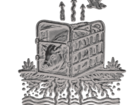
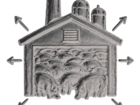
The project is based on an understanding of conventional pig production as a system in which consequences are displaced across scales, geographies, and temporalities. The diagram visualises how the direct outputs of production are connected to local, systemic, and global externalities.
Danish conventional pig production has increasingly become the subject of debate within animal welfare, climate, environment, public health, and agricultural policy. The criticism is directed not only at specific conditions within production, but at the structural logics that organise an intensive and export-oriented production model.
The production generates a range of negative externalities — including environmental impact, high resource consumption, antibiotic resistance, and limited opportunities for natural animal behaviour — where large parts of the consequences are displaced away from the production economy itself and onto animals, ecosystems, society, and future generations (Holm, 2026).
The discussion of pig production is therefore not only about food production, but also about how a modern society chooses to balance economic interests against concerns for climate, nature, health, and animal welfare.
At the same time, the topic has become increasingly politically relevant alongside the growing debate about agriculture’s role in the green transition. The project positions itself within this context and examines how spatial design can be used as a tool to rethink the relations between production, animals, humans, and landscape.
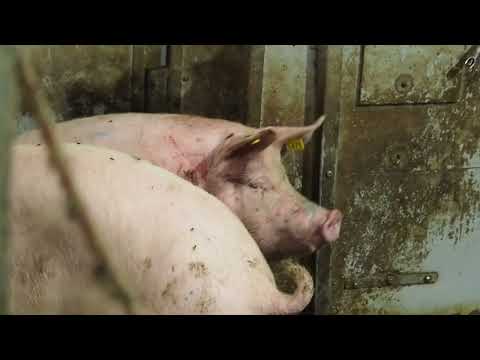
Photo documentation from field studies


The project stems from an ambition to investigate how design can function as an active actor in addressing complex societal issues — here taking conventional pig production in Denmark as its point of departure. I have been particularly interested in how spatial design can contribute to formulating and materialising alternative forms of production that function not only as critique, but as concrete spatial and operational proposals.
At the same time, the project has been motivated by a desire to work with design as an interdisciplinary practice, where design decisions are developed in dialogue with knowledge from fields such as animal welfare, ethics, and climate and environmental research. In working with complex production systems, I find that design only becomes meaningful when it is informed by perspectives beyond the field of design itself.
The project does not stem from a desire to legitimise or celebrate industrial animal production as a system. Nor does it seek to determine whether humans should fundamentally keep and raise animals for food production. On the contrary, the project acknowledges the ethical dilemma inherent in keeping living animals under human custody for the purpose of consumption.
It is precisely for this reason that the project positions itself within a pragmatic and reform-oriented field. Not because the existing form of production is considered acceptable, but because the absence of action does not change the conditions for the animals, humans, and landscapes already embedded within the system. The motivation therefore lies in investigating how spatial design can contribute to making more responsible alternatives visible, discussable, and spatially possible within existing structures.

The project is structured around two interdependent investigations: a systemic reformulation of production and a spatial translation of the systemic reform’s principles. Together, these two levels define the project’s scope and delimitation.
Frame 1: Systemic reform
The first frame of the project examines which structural shifts are necessary in order to rethink conventional pig production on more responsible terms. Here, the project engages with the overarching logics of production, including scale, operations, animal welfare, resource consumption, and the relationship between production and landscape.
The aim is not to reconstruct the entire economic or political system of agriculture, but to formulate a concrete systemic reform basis that can serve as a point of departure for spatial development.
Frame 2: Spatial implementation
The second frame of the project examines how the principles of the systemic reform can be translated into spatial, organisational, and material interventions. Allindemaglegaard is introduced as an existing and representative conventional pig production facility, used to investigate how a typical Danish production site can be reorganised through new principles for flow, inhabitation, supervision, housing typology, and the relationship between inside, outside, and landscape.
The case functions both as a concrete site for the project’s spatial development and as a way of testing principles that may potentially be transferred to similar standardised production facilities.
The spatial implementation is organised around four main interventions, each translating the systemic reform into concrete architectural, operational, and landscape-based interventions:
1. Transformation of the existing sow and piglet facility
The existing building structure, foundations, and technical infrastructure are reused and reprogrammed through new housing principles, openings, zoning strategies, and flow sequences.
2. Development of a new breeding barn typology
Requirements for animal welfare, social stability, movement, and supervision are translated into a new spatial organisation for sows.
3. Development of a new farrowing hut
Farrowing, nest-building, piglet protection, microclimate, and supervision are translated into a new hut typology that supports maternal behaviour while balancing freedom, safety, and operational control.
4. Overall site programming
The wider site is programmed through outdoor areas, farrowing fields, circulation, ecological zones, and operational functions, linking the detailed interventions to a broader landscape-integrated production model.
Together, the four interventions form the project’s spatial response to the systemic reform: a combination of transformation, new construction, and landscape reprogramming. Their dimensions and interrelations are defined through a new production model for Allindemaglegaard.
To translate the project’s research and systemic reform work into concrete spatial decisions, five operational design principles have been developed. The principles function as a filter for the project’s spatial development and connect biological, environmental, and operational considerations with concrete design strategies.
1. Biological Behaviour as Spatial Driver
Production is adapted to the pig’s biological rhythms and social behaviour, rather than requiring the animal to conform to the demands of production efficiency.
2. Integration of Landscape & Outdoor Areas
Landscape and outdoor areas are integrated as active parts of production.
3. Visibility, Flow & Supervision
Spatial organisation is used to strengthen the relationship between animals, humans, and operations.
4. Climate & Atmospheric Conditions
The barn environment is treated as an active part of animal welfare and the working environment.
5. Hygiene, Zoning & Environmental Management
Spatial zoning is organised around the pig’s natural behaviour and environmental conditions.

The existing building complex for breeding, gestation and farrowing is transformed into a new facility for slaughter pigs. The building was selected as the project’s primary field of transformation because it provided empirical insight, a clear delimitation, and the possibility of opening the production towards the surrounding outdoor areas.
The transformation retains the main structural elements, including rafters, gables, concrete foundation, and floor construction. The foundation is central, as it has already been developed for controlled slurry management. The slaughter pigs are therefore still organised on top of this environmental-technical infrastructure, while the building’s spatial and atmospheric qualities are reimagined through openings, zoning, and new flow principles.
The long side walls are opened up to create daylight, natural ventilation, and a stronger connection between inside and outside. The roof is adapted so that the pigs have access to both covered resting zones and more open, airy living areas.
The plan is organised around flow and supervision. All pens can be accessed from multiple sides, and long sightlines through the building strengthen the staff’s overview and the visual contact between animals and humans. The feeding zones are placed along the central aisle, so that feeding and supervision are combined within the same workflow.
The pens are developed with a hexagonal geometry that optimises the area of the existing foundation and creates more varied living zones than traditional rectangular pens. The angled walls allow the pigs to seek calm in smaller groups and support their tendency to rest against fixed edges and against one another.
The zoning is based on the pig’s natural behaviour. Resting, feeding, activity, and dunging zones are clearly separated, and the primary dunging and cooling zone is placed outdoors. Here, wallows and open concrete zones are integrated to support thermoregulation while also moving dunging behaviour away from the resting areas. The wallows are connected to the gutter, allowing rainwater to be integrated into the operation.
The hexagon, which first emerged in the work on the slaughter pig barn, is subsequently continued as a recurring geometric motif in the project’s new typologies. The form is used both as a plan-organising principle and as a motif in openings, windows, and gates, thereby creating a visual and spatial coherence between the transformation, the breeding barn, and the farrowing huts.


The breeding unit is developed as a new typology because the existing building structure is not considered able to support the systemic reform’s requirements for social stability, ventilation, flow, and supervision. At the same time, the insemination unit is a particularly critical part of production, as this is where reproduction is organised and the next production cycle begins.a new breeding barn typology
In the new production model, the sows remain here for four weeks before being moved on to the gestation field. Whereas the conventional breeding unit is often organised through closed stalls and fragmented units, this typology works with a more open and legible structure.
The plan is organised so that staff can orient themselves across the surrounding pens. The intervention has a panoptic quality — not as control in the traditional sense, but as a tool for supervision, overview, and faster identification of problems. The individual pens are arranged around a central core, while access routes and gates support movement, handling, and daily work.
The façade uses flexible shutters, making it possible to regulate the barn’s climate according to weather, season, temperature, and the animals’ needs. The shutters can be opened for air exchange and natural ventilation or partially closed to reduce draughts and create more sheltered living zones. In this way, the façade functions as an active climate-regulating element rather than a fixed boundary between inside and outside.


As part of the systemic reform, gestation and farrowing are moved out into the landscape. The farrowing fields thus become an active part of the production structure, where sows and piglets gain access to soil, vegetation, fresh air, and greater freedom of movement.
The farrowing huts are developed as an alternative to the conventional farrowing unit, where the sow is often confined and has limited opportunity to move, build a nest, and express natural maternal behaviour. The hut must therefore balance freedom, protection, microclimate, supervision, and operations.
The central intervention is the implementation of a piglet creep area. Piglets require a warmer microclimate than the sow, especially during their first weeks of life, while crushing is also a significant risk. The creep area creates a sheltered and warmer space into which the piglets can retreat, but which the sow cannot access. Flexible bars separate the creep area from the sow’s living space and reduce the risk of crushing without confining the sow.
The bars can change function as the piglets develop. When the piglets grow larger and become less dependent on the warmth of the creep area, the bars can be raised and used as a holder for hay or other rooting material. The hut thereby works with different climatic zones: a cooler and more airy zone for the sow, and a more sheltered, draught-free, and warm zone for the piglets.
In terms of materiality, the hut uses wooden shingles as a façade material. The choice is both sensory and practical: pigs have a natural tendency to rub against trees, and the façade imitates some of these tactile qualities. At the same time, wooden shingles can be maintained and replaced in smaller sections.
Flexible ventilation and inspection openings make it possible to regulate air exchange and supervise the animals from outside. This reduces the need to enter the hut during the vulnerable period after farrowing, when the sow needs calm and is often more protective of her piglets.
The farrowing fields are organised as a rotational system, allowing areas to rest and regenerate between use, while manure can become part of a more controlled cycle.


The development of the project’s systemic reform and spatial interventions is based on an interdisciplinary understanding of conventional pig production as a complex production system composed of relations between animals, humans, technology, landscape, and production logics.
The project’s research foundation has been developed through empirical field studies, statistical and research-based investigations, journalistic and cultural sources, as well as theoretical perspectives from Actor-Network Theory and more-than-human thinking. Together, these forms of knowledge have informed the understanding of the existing production structure, as well as the development of the project’s systemic reform proposal and spatial interventions.
The research foundation is structured through four interconnected knowledge layers, which together inform the project’s analysis, systemic reform, and spatial implementation.
The project’s empirical field studies provided a situated understanding of conventional and organic pig production facilities, with Allindemaglegaard as the primary case and Hestbjerg Økologi as a reference for alternative operational and housing principles.
The observations made visible how architecture, materiality, and technical systems regulate movement, access, monitoring, and care within the barn. They also gave insight into the sensory and bodily dimensions of production, where smell, noise, temperature, air quality, animal density, and biological materials made the logics of production physically present.
This empirical knowledge informed the project’s spatial priorities, particularly the work with flows, supervision, atmosphere, and the relationship between animals, humans, technology, and production environments.
The project’s diagnostic understanding of Danish conventional pig production was developed through statistics, research reports, veterinary research, and environmental studies on production scale, animal welfare, antibiotic use, land use, and environmental impact. These sources were used to map the externalities of production and the economic and operational logics that sustain the existing system.
Rather than treating climate impact, water pollution, animal welfare issues, public health risks, and economic structures as separate problems, the research clarified how they are connected through the same intensive and export-oriented production logic.
This diagnostic knowledge became central to the project’s systemic reform work and formed the basis for developing alternative production principles that address production scale, animal welfare, environmental responsibility, and the relation between production and landscape.
The project’s critical and relational perspectives are informed by philosophical literature, climate philosophy, ecological social theory, and contemporary critiques of industrial animal production, including Bruno Latour, Mickey Gjerris, Nikolaj Schultz, Mathilde Walter Clark, and Alexander Holm. These perspectives were used to examine the cultural and ethical assumptions underlying modern agriculture’s relationship to animals, nature, and landscape.
Together, the sources shifted the project’s perspective from understanding pig production as a technical production system alone, towards understanding it as a cultural, ideological, and more-than-human system. They made visible how industrial production is shaped by ideas of animals and nature as resources that can be controlled, optimised, and distanced from everyday life.
Rather than functioning only as critique, these perspectives informed the project’s systemic reform work by opening questions of care, responsibility, coexistence, and spatial relations. They supported a relational approach to spatial design as a practice that actively shapes the relationship between animals, humans, technology, production, and landscape
The project’s systemic reform work is informed by research-based analyses and future visions for Danish land use, climate transition, and agricultural production, including in particular CONCITO’s analyses of future land use (CONCITO, 2024) and perspectives from Stiig Markager (Dahlager, 2026; Markager, 2026). These sources were used projectively and reform-oriented as a basis for developing alternative principles for the organisation of pig production, land use, and the relationship between production, landscape, and nature.
Where the diagnostic and critical perspectives contributed to understanding and problematising the existing production logic, these sources were used constructively in the development of the project’s systemic reform. Together, the perspectives pointed to the need for structural changes in Danish agriculture, including a reduction in animal production, the release of agricultural land, reduced soy imports, and stronger integration between production, biodiversity, and landscape.
In particular, CONCITO’s visions contributed to understanding agriculture as part of a larger territorial and ecological transformation, in which climate, biodiversity, aquatic environments, and food production must be considered together through new spatial and political structures. At the same time, Markager’s analyses supported the project’s understanding that improvements in animal welfare, climate, and environment cannot be achieved through technological optimisation alone, but require a reduction and reorganisation of the existing scale of production (Dahlager, 2026).
These perspectives were translated into concrete systemic reform principles in the project, including a reduced production scale, a longer stay for the animals, the integration of outdoor areas, and a stronger connection between production, landscape, and ecological cycles.


The systemic reform functions as the project’s systemic framework and translates the preceding research into a concrete alternative production model. It is based on four central shifts: a reduction in production scale, an extension of the animals’ life and production rhythms, a reorganisation around biological behaviour, and a changed use of agricultural land. The systemic reform proposes a fundamental restructuring of Danish conventional pig production through the following principles.
The 80% reduction should not be understood as a quickly implementable or economically unproblematic measure, but as a projective framework for investigating what a more responsible production would require spatially, operationally, and in relation to the landscape.
The systemic reform therefore changes not only the number of animals, but also the temporal and spatial logic of production: the animals remain longer in the individual sections, weaning takes place later, and the production flow is organised to a greater extent according to biological development rather than maximum throughput.
At the same time, the systemic reform requires a different understanding of agricultural land. When production is reduced, land is released from feed production and can instead become part of a more diversified landscape strategy involving outdoor areas, nature, crops, tree production, and ecological cycles.
The systemic reform thus functions as the project’s systemic foundation: a shift in production scale, operations, time, and land use, which is subsequently explored through the spatial transformation of Allindemaglegaard.

Before the spatial transformation could be developed, the systemic reform’s production principles were translated into a concrete production model for Allindemaglegaard. The calculations examine how a reduction of approximately 80% affects the farm’s scale, batch production, length of stay, and distribution of animals between barn, outdoor areas, and farrowing fields.
The new production model is organised as a two-week batch system with approximately 210 sows distributed across 18 sow groups. A new group is introduced every other week, after which the sows move through the service barn, gestation paddock, farrowing field, and weaning. The model extends the animals’ length of stay in the individual production sections and organises the flow according to biological development rather than maximum throughput.
The calculations define the project’s capacities and spatial dimensions, including the number of sows per group, the number of active paddocks, the area requirements for gestation and farrowing fields, and the size of the slaughter pigs’ living areas. The production model therefore functions as a link between the systemic reform’s systemic principles and the subsequent spatial design decisions.

The project’s central dilemma has been the tension between animal welfare, environmental impact, and operations. Greater access to outdoor areas can support natural behaviour, movement, and improved living conditions for pigs. At the same time, outdoor production is not in itself a simple solution, as manure, nutrient runoff, infection pressure, and land use still have to be managed carefully. The project therefore works with a hybrid strategy, where existing environmental-technical infrastructures are combined with new forms of outdoor access, zoning, and landscape rotation.
This dilemma also raises a broader question: what changes when pig production is no longer hidden away inside closed buildings, but becomes spatially connected to fields, weather, soil, smell, movement, and animal behaviour? The project does not only ask how the pig barn can be improved, but how the relation between production, animals, humans, and landscape could be reorganised. In that sense, the proposal is not only about better technical conditions, but about changing what becomes visible — and therefore what becomes possible to care about.
If the project’s vision were pursued, its contribution would be to make these relations more visible and more responsible. For the animals, the proposal would not remove the ethical dilemma of keeping pigs for food production, but it could create better conditions for biological rhythms, social behaviour, movement, rooting, nesting, and thermoregulation. For the landscape, reduced production could release land from feed production and allow it to become part of a more varied system of outdoor areas, rotation, vegetation, ecological zones, and manure cycles. For humans, the proposal could change both work and perception: stronger sightlines, clearer flows, and more visible animals may support supervision, but may also make the animals harder to understand only as production units.
Can spatial design change not only the conditions of production, but also the way animals and landscapes are perceived? Can a different organisation of barns, fields, flows, and encounters reduce the distance between consumption and consequence? If animals become more visible as living, sensing, and social beings, and if the landscape becomes more than a productive surface, then meat may also become harder to understand as a cheap and detached everyday product. Instead, it becomes connected to land use, animal life, labour, ecology, and responsibility.
However, the project also has limitations. Spatial design cannot solve the structural problems of pig production alone, and the proposal has not been technically, veterinarily, or economically verified. There is also a risk that improved spatial conditions could be used to legitimise continued animal production without addressing scale, consumption, and economic dependency. The design proposal therefore only becomes meaningful if it is understood together with the systemic reduction on which it is based.
The project’s contribution is therefore not a final solution, but a spatial and critical target image. It shows how systemic reform can be translated into buildings, flows, outdoor areas, and new relations between humans and non-humans. In doing so, the project makes it possible to discuss not only how pig production could be organised differently, but also what kinds of relations between animals, landscapes, consumption, and society we are willing to design.


This thesis project was made possible with generous support from Beckett-Fonden and Boligfonden Kuben