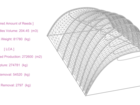
A


Aiming to revive local reed production in Denmark, this study develops a design system for temporary bending-active structures using reed bundles. It combines material investigation, digital simulation, and generative design tools to support sustainable reed architecture rooted in community building and responsive to environmental conditions.
Abstract
This project aims to promote the local cultivation and use of reed by proposing bending-active structures made from reed bundles for community event spaces in Denmark. In response to the growing reliance on imported reed, the project explores how reed architecture can be rooted in place through digital design. By conducting material investigations and developing a computational design tool, the project establishes a workflow for designing reed structures that reflect both environmental context and material behavior. A construction guidebook was also created to support hands-on community building, encouraging collaborative practices and a more sustainable approach to temporary architecture using locally sourced reed.

Background
Reed is a fast-growing, biodegradable material that offers great potential for sustainable architecture. Reedbeds also function as vital ecosystems, supporting biodiversity and acting as natural carbon sinks. However, despite these ecological benefits, reed architecture in Denmark heavily relies on imported material, particularly from Asia. This dependence not only increases the carbon footprint of construction but also undermines the local ecological and economic potential of reed cultivation.
Research Question


Methodology

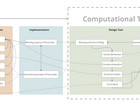
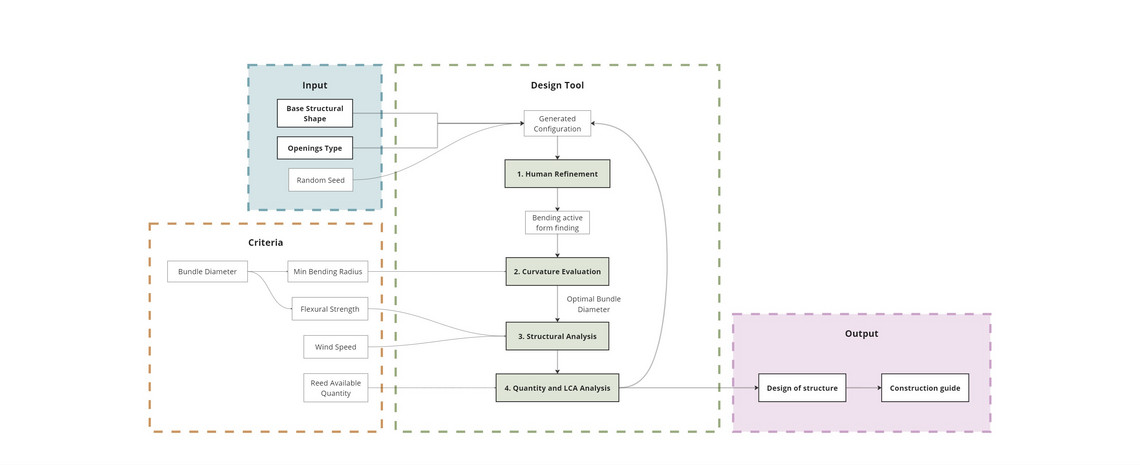
The methodology of this study integrates four key areas: material investigation, digital exploration, design tool development, and design iteration. Each area addresses a set of criteria outlined in the following diagram. Central to the process is the use of computational tools, which are employed to respond to both the physical behavior of reed bundles and the structural demands of bending-active systems. This integrated approach allows for a design process that is both materially informed and structurally responsive.
Material Investigations
To accurately simulate bending-active structures, the study began by investigating the mechanical behavior of reed bundles. A series of physical tests, including three-point bending tests and minimum bending radius assessments, were conducted to understand the bending properties of bundled reeds. The results provided essential data for implementing realistic material behavior into digital simulations.


Digital Exploration
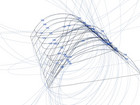
Using live physics engine software such as Kangaroo Physics and Kangaroo 2 Engineering, a modeling method was established to simulate the geometry of bending-active elements. Through relaxation simulation techniques, the process allows for form-finding, enabling the generation of stable and efficient structural shapes that respond naturally to bending forces.


Design Tool Development
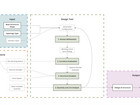
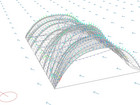
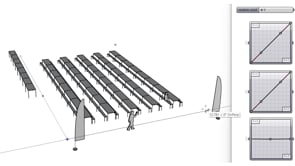
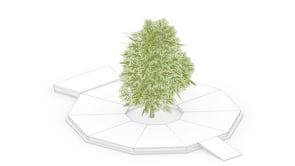
The design tool was developed to support the creation of bending-active structures using reed bundles, making the design process more accessible to both designers and communities. It integrates a wide range of findings from the project’s investigations, such as the mechanical behavior of reed bundles, their bending limitations, and the spatial logic of temporary event structures. The tool is capable of generating diverse structural configurations with interconnected elements that enhance overall stability. As shown in the diagram below, the tool responds to multiple design criteria, ensuring a balance between form, function, and feasibility. A digital workflow, illustrated in the following section, outlines the comprehensive design system, which includes four stages of evaluation to ensure the final output fits well within the intended site and context.

Design Iterations
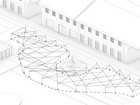
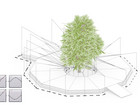
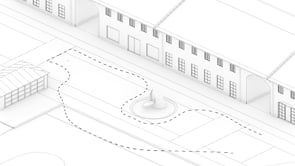
The design iteration process explored how bending-active reed structures could shape and support event spaces across four festivals in three different municipalities in Denmark. Each proposal began with an analysis of the existing event space and its spatial qualities. Insights from this analysis were then incorporated into the digital design process using the developed design tool, which allowed for the generation of structures tailored to each site’s unique context. The tool also made it possible to evaluate the environmental aspects of each design, such as potential ecological benefits tied to local reed use. These design iterations demonstrated how computational methods and material responsiveness can come together to support place-specific, sustainable design.


Prototype
The prototype was originally developed for an exhibition space and designed to be assembled from two symmetrical, bending-active components. During the building process, the bundles were made according to calculated diameters, with a slightly thicker base to support the structure. However, this led to an unexpected break at the point of highest curvature. After adjusting the approach and replacing the broken sub-bundle, the two parts were joined, resulting in a surprisingly flexible and stable form. This finding highlights the importance of incorporating diameter variation for the future development of the digital design tool. The prototype also demonstrated strong potential as a temporary structure for community use, thanks to its lightweight, ease of assembly, structural adaptability, and use of locally available natural materials.


Construction Guidebook
The construction guidebook was created as a practical and inclusive manual to support communities in building bending-active structures using reed bundles. It serves not only as a technical reference but also as a tool to foster communal engagement and sustainable practices. The guide walks users through the full building process, from the seasonal harvesting of local reed to creating sub-bundles, forming structural bundles, and assembling the final structure. It offers detailed, step-by-step instructions on how to bundle reeds effectively, including techniques for different bundling designs that serve various structural purposes, such as arches and interconnections.