A


|Reinterpreting Guaraní Heritage: Additive Manufacturing and Digital Heritage Strategies for Architectural and Cultural Reconstruction|
Reinterpreting heritage, claiming new narratives from a decolonial perspective
The purpose of this thesis: to give voices to the guaraní community, to own the complexity of heritage and to think about the role of the digital.
Abstract
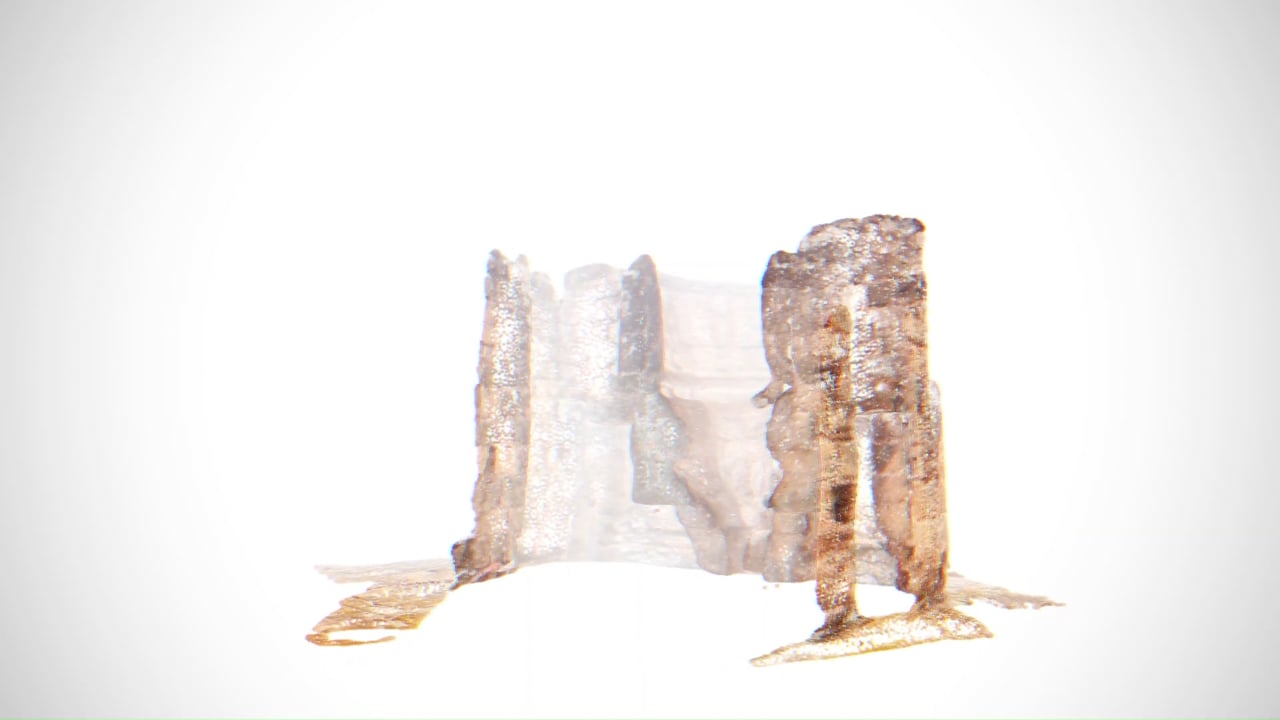
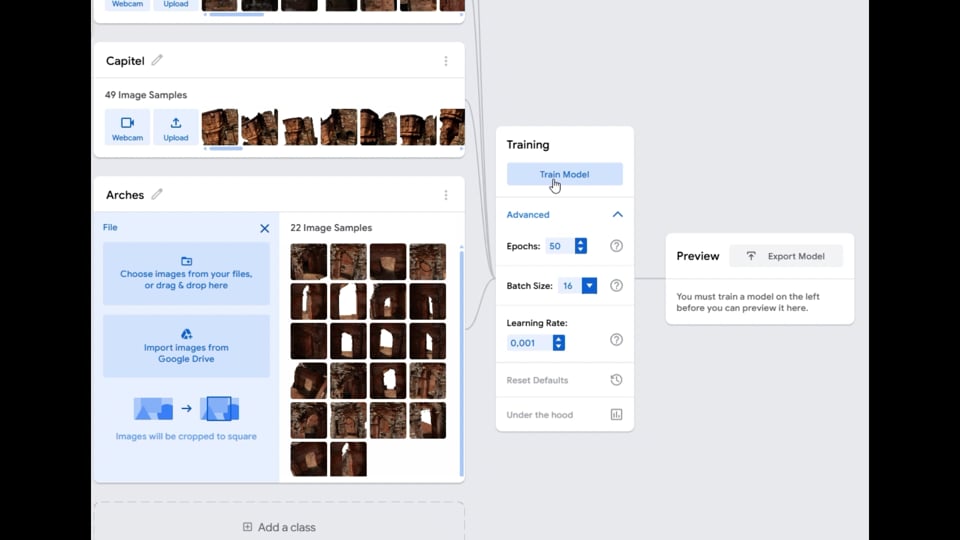
This project proposes a methodological framework for the reinterpretation of cultural heritage through digital workflows, Data acquisition methods —3D scanning, modeling reconstitution; Fabrication —Additive manufacturing, focusing on three interventions strategies: imitation, recomposition and disruption. While heritage preservation has traditionally prioritized the physical safeguarding of monuments and artifacts, the emergence of digital technologies offers new opportunities for engaging with cultural memory in more dynamic and interpretive ways. By leveraging tools such as 3D scanning and clay 3D-printing, this approach emphasizes the fluidity of heritage as a site of ongoing interpretation rather than a fixed, authoritative narrative. Relies on the exploratory case study of the Jesuit-Guarani ruins of Trinidad, Paraguay, to propose a critique of institutionalized heritage narratives presenting colonial encounters in overly harmonious terms, expanding on rich historical contributions, who have challenged these perspectives since 1775. The project advocates participatory engagement with heritage that empowers both local communities and postcolonial societies, with digital technologies supporting them actively reshaping historical narratives, fostering more critical perspectives on colonial heritage.
The Guaraníes are an indigenous group native to a large region in South America, primarily spanning Paraguay, parts of Brazil, Argentina, and Bolivia. Their presence in this territory dates back in precolonial period, and they have historically been a nomadic community, moving within vast natural landscapes.
The second map shows the distribution of the Guaraní population across Paraguay in recent years.


The Guaraní community were traditionally nomads. Their way of life was mobile and deeply connected to nature, making permanence in built structures less central than in sedentary cultures.
The oga — their traditional home — was typically a longhouse, a flexible, organic architectural form that embodied their values, social organization, and relationship with the environment. The oga was not just a building but a living space, reflecting a worldview of harmony with nature and fluid community dynamics.
Because of this nomadic and non-monumental lifestyle, very few physical traces of Guaraní architecture survive today. Unlike stone or brick structures, these homes were made from perishable materials, designed to be temporary and adaptable.
In contrast, the heritage that has endured—most notably the Jesuit missions like Trinidad, a World Heritage Site declared by UNESCO—represents a very different, colonial vision of architecture and culture. Trinidad stands as a monument of the so-called Guaraní Baroque, a style often celebrated as a hybrid of indigenous and European influences.
The tangible heritage we see today is a colonial imprint rather than an authentic, autonomous expression of Guaraní identity. This project begins by questioning how we engage with this complex legacy and whose voices are heard when we speak of “Guaraní heritage.”